

Simply understanding anxiety and how it operates doesn’t always stop it, many people who struggle with anxiety about needing the toilet say the same thing:
“I know it’s anxiety… but it still happens.” or “I know I don’t need the toilet, but I still worry”
They may understand anxiety and how the pattern occurs. They may even recognise the thoughts that trigger it. Yet in certain situations, before leaving the house, during a long journey, or in a meeting — the familiar wave of worry still appears.
It can be very draining…but
The Brain Reacts Faster Than Logic
Our brains are designed to react quickly when something might be wrong.
When the mind imagines a situation where something embarrassing or uncomfortable could happen, the nervous system can respond automatically. That response happens very quickly, often before logical thinking has time to step in.
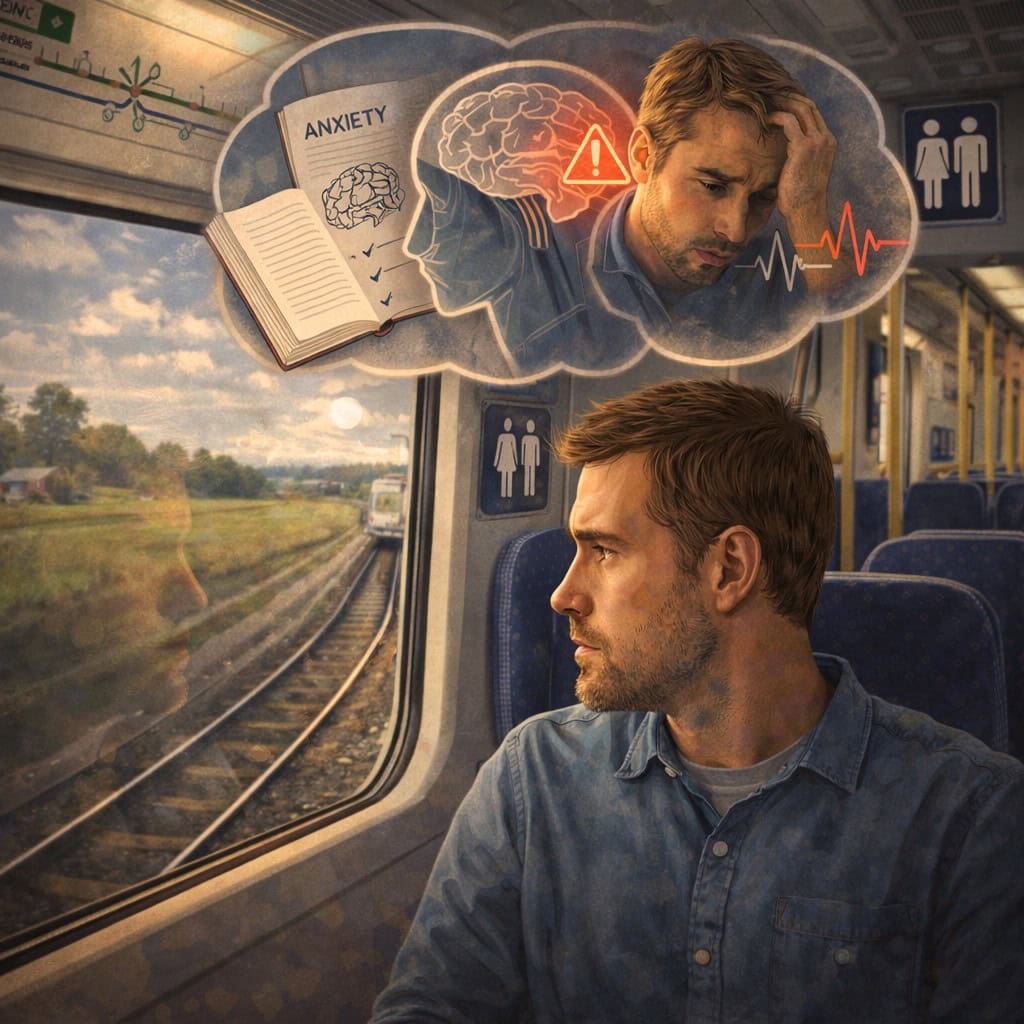
So even understanding anxiety and knowing that the fear is unlikely, the body may still react as if the risk were real. The mind is trying to protect you.
The Role of the “What If” Thought
A key part of this pattern is the predictive thought.
It may sound like:
- “What if I suddenly need the toilet?”
- “What if I don’t make it in time?”
- “What if there’s nowhere to go?”
These thoughts are the brain’s way of trying to anticipate possible problems.
In many situations that ability to anticipate risk is helpful. But when the brain begins repeatedly imagining a specific scenario, it can start to treat that scenario as if it is likely to happen.
The body then reacts with anxiety.
The body responds.
Once anxiety rises, several things happen in the body:
- internal sensations become more noticeable
- attention focuses on the body
- muscles may tighten
- breathing may change
These physical changes can make normal bladder or digestive sensations feel stronger. At that point, the mind may interpret the sensation as confirmation that the feared situation is about to occur.
The thought returns:
“Maybe I really won’t make it.”
This creates a powerful feedback loop between thought, sensation, and anxiety.
Why Understanding Anxiety, Logic or Positive Thinking Doesn’t Break the Cycle
Because the reaction involves the nervous system, it isn’t controlled by self talk. Trying to reassure yourself logically can sometimes help in the moment, but it doesn’t often change the response pattern. It can be easy to understand what is going on but the body continues to react automatically.
Changing the Pattern
The good news is that patterns like this are learned responses, and learned responses can be retrained. The mind can change, habits can change, thoughts can change.
The goal is not simply to convince yourself that the fear is irrational.
Instead, the focus is on gradually changing how the brain responds to:
- the prediction
- the body sensation
- and the situation itself
As the nervous system learns that these situations are safe, the intensity of the reaction often decreases. As sensations decrease, the worrying thoughts disappear.
Over time, many people find they can enter situations that once triggered anxiety without the same level of fear or body monitoring. They start to feel calm, confident and in control. This means it feels possible to do the things that have been avoided for so long, travelling, meetings, social events.
When the Pattern Starts Affecting Your Life
If the fear of not making it to the toilet is influencing where you go, how you travel, or what situations you feel comfortable agreeing to, it may be helpful to explore the pattern more closely.
Many people find it reassuring simply to speak with someone who understands how this type of anxiety develops and how it can change. Get in touch via the book now or contact page.