

When you feel anxious, your body automatically switches into a fight-or-flight response. This is the same system that prepares you to react quickly if something might be wrong.
During that response, several things happen in the body:
- Your muscles become more alert
- Your attention becomes more focused on internal sensations
- Your digestive and bladder systems can become more sensitive
Because of this increased sensitivity, normal body signals can feel stronger than usual.
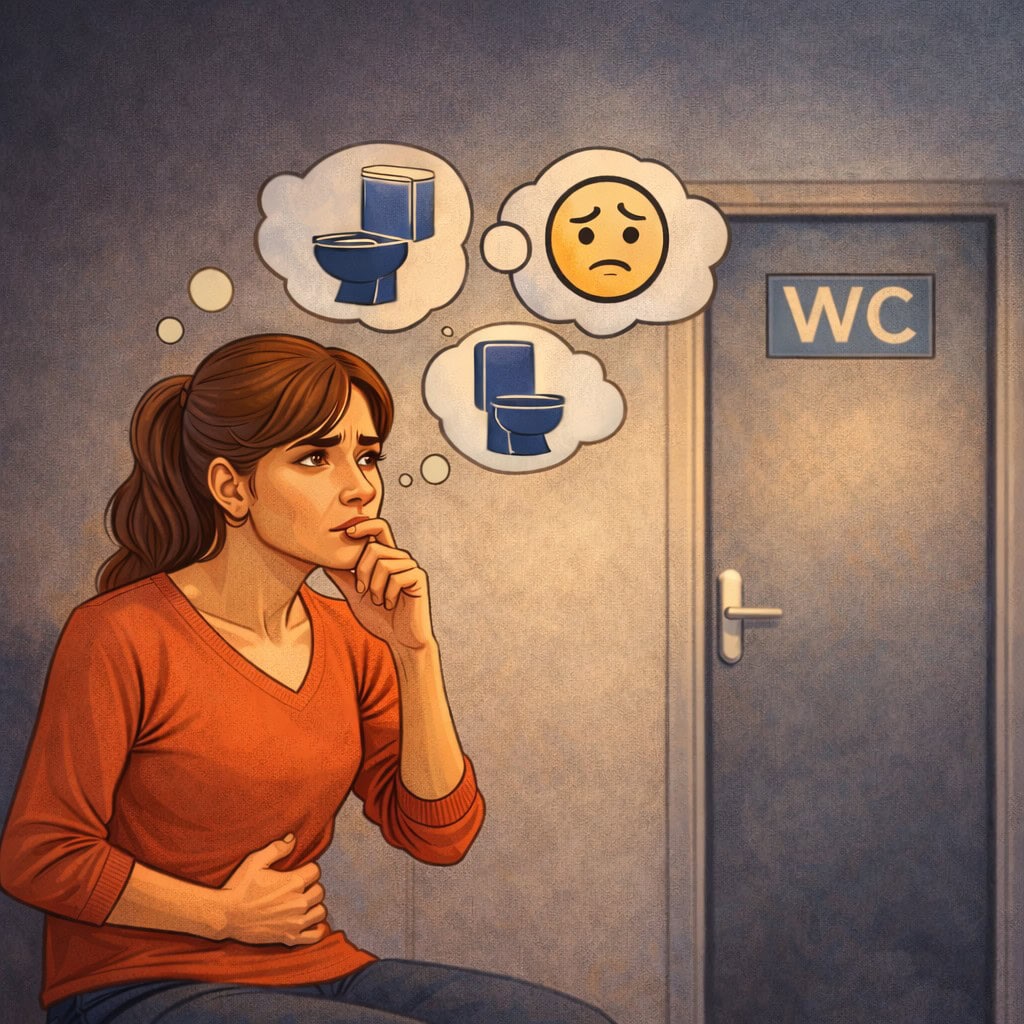
Most people experience mild signals from their bladder or bowel throughout the day without paying much attention to them. But when anxiety is present, those same signals can suddenly feel much more noticeable.
At the same time, the mind often starts monitoring the body more closely:
“Do I need the toilet? What if I suddenly need to go?”
That extra attention can make the sensation feel even stronger, which increases anxiety — and the cycle continues.
This doesn’t mean something is wrong with your bladder or bowel.
It means your nervous system is temporarily in a heightened state of alertness, which makes normal sensations feel more urgent than they really are.
When This Pattern Starts Affecting Daily Life
For some people, this anxiety pattern gradually becomes more disruptive. They may start planning routes around toilets, avoiding longer journeys, or feeling tense in situations where leaving quickly might be difficult.
Even when they understand that anxiety is driving the reaction, the fear of “what if I don’t make it?” can still feel very real in the moment.
The good news is that this pattern is not permanent. With the right approach, it’s possible to retrain how the brain responds to those sensations and reduce the cycle of anticipation and anxiety.
If this experience feels familiar, get in touch via the book now or contact page. Many people find it helpful talking through what’s been happening with someone who understands the pattern.